Japan Garbage Sorting Guide for Foreign Residents
A Comprehensive English Guide with Japanese Item Lists
Japan is known for its clean streets, orderly neighborhoods, and a strong culture of environmental responsibility. For many foreign residents, however, the Japanese garbage sorting system can feel overwhelming at first. Each municipality has its own rules, terminology, schedules, and even specific types of garbage bags. What is considered recyclable in one country may be classified differently in Japan. Likewise, some waste items that seem “burnable” might actually fall into hazardous or special categories.
This guide is designed to help foreign residents understand the logic behind Japan’s waste management system and to navigate everyday garbage disposal with confidence.
1. Overview of Japan’s Waste Management System
Japan’s waste management system is built on three key pillars: strict sorting, recycling, and community responsibility. Local governments (市区町村) create the rules, collect waste, and run recycling programs. Because rules vary by area, two neighboring cities may have completely different policies. This means that understanding your specific municipality’s system is essential.
Many people are surprised to find that Japan’s streets have very few public trash cans. This is partly to encourage individuals to take responsibility for their own waste and also due to safety measures introduced after the 1995 Tokyo subway sarin incident. As a result, households play a crucial role in sorting and disposing of waste properly.
2. Why Garbage Sorting Matters in Japan
Japan incinerates a large portion of its waste in highly advanced facilities. To ensure efficient combustion and reduce pollutants, waste must be sorted properly. Recyclables are separated to reduce environmental impact and support resource recovery.
Sorting matters because:
- Improperly sorted waste can contaminate recyclables.
- Incorrect disposal of hazardous items can cause fires in garbage trucks.
- Communities are responsible for maintaining cleanliness around collection points.
- Some apartment buildings require residents to follow stricter internal rules.
In short, the system only works if everyone cooperates—even newcomers.
3. Basic Categories of Waste (日本語分類リスト付き)
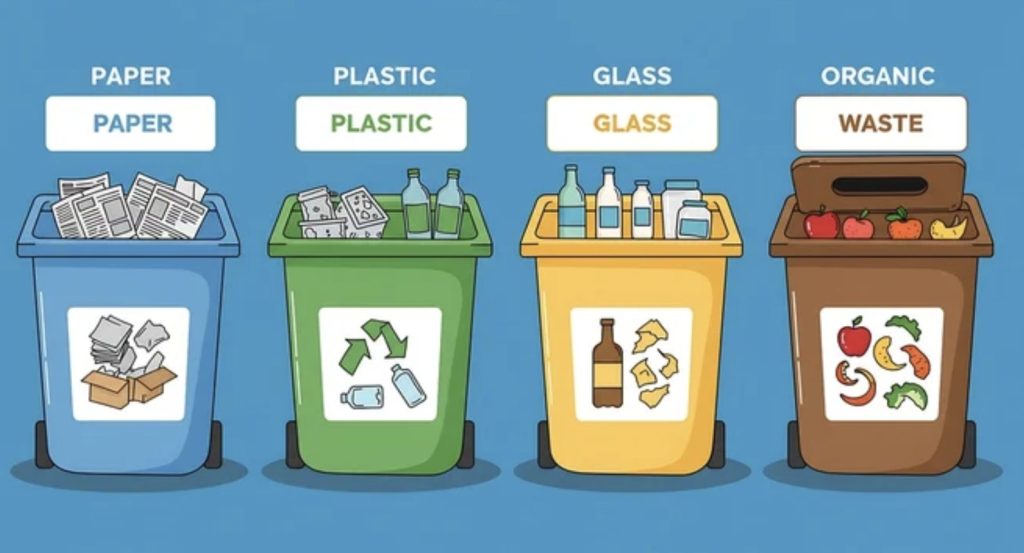
Below are common waste categories used across Japan. Names may vary slightly by city, but these are the typical classifications.
日本語分類リスト:
- 可燃ごみ(Burnable Waste)
- 不燃ごみ(Non-Burnable Waste)
- 資源ごみ(Recyclables)
- プラスチックごみ(Plastic Waste)
- ペットボトル(PET Bottles)
- ビン(Glass Bottles)
- カン(Cans)
- 古紙(Paper Recycling)
- 段ボール(Cardboard)
- 粗大ごみ(Large-Sized Waste)
Each category has its own rules regarding preparation, cleaning, and collection days.
4. Burnable Waste(可燃ごみ)
Burnable waste is generally collected 1–3 times per week. This category includes items that can be safely incinerated without releasing harmful substances.
Typical items include:
- Food scraps
- Paper scraps and tissues
- Small amounts of wood
- Dirty paper or plastic (that cannot be recycled)
- Cloth items
Foreigners often misunderstand food waste rules. In most municipalities, you must drain excess liquid from food scraps before placing them in the burnable waste bag. This helps reduce smell, prevents leakage, and supports smoother incineration.
Additionally, diapers (おむつ) are usually burnable, but check your local rules.
5. Non-Burnable Waste(不燃ごみ)
Non-burnable waste is collected less frequently—often once or twice per month. This category includes items that do not burn easily or would cause damage during incineration.
Common non-burnable items:
- Ceramics and glass (broken cups, plates)
- Metal tools
- Small appliances (depending on rules)
- Nails, screws, or metal pieces
- Heat-resistant items, such as glass cookware
Broken glass must be wrapped in newspaper and labeled as 「危険」 (dangerous) before disposal.
Municipalities differ on whether certain small electronics or batteries belong in this category or hazardous waste.
6. Recyclables(資源ごみ)
Recyclables are collected on specific days and must be cleaned. Contaminated items may be rejected.
Recyclable types include:
- Paper (newspapers, magazines)
- Cardboard
- Cans
- Glass bottles
- PET bottles
- Some household plastics (市区町村による)
The key rule: “Clean, dry, and sorted.”
Simply rinsing containers lightly and removing labels when required is enough. Excessive washing wastes water and is not necessary.
7. PET Bottles(ペットボトル)
PET bottles have their own category in most cities.
Preparation steps:
- Remove the cap(キャップ).
- Remove the label(ラベル).
- Rinse lightly.
- Squash the bottle if required.
Important: Caps and labels usually belong to プラスチックごみ, not PET.
Foreigners often mistakenly throw PET bottles into regular plastic waste. PET is recycled separately into textiles, new bottles, or packaging.
8. Glass Bottles(ビン)
Glass bottles must be emptied and rinsed. Some cities divide them by color (brown, clear, green), though this is becoming less common.
Examples:
- Wine bottles
- Sauce bottles
- Jam jars
Lids may go into metal waste or plastic waste depending on the material.
9. Cans(カン)
Cans include aluminum and steel containers.
Common examples:
- Soft drink cans
- Food cans
- Beer cans
- Some spray cans(BUT these may belong to hazardous waste if not empty)
Cans must be fully emptied and sometimes lightly rinsed.
If spray cans are not fully empty, they can explode in garbage trucks—so take care.
10. Paper Recycling(古紙)
Paper recycling is highly organized in Japan.
Types of recyclable paper:
- 新聞(newspapers)
- 雑誌(magazines)
- 紙パック(milk cartons)
- 段ボール(cardboard)
Most municipalities require items to be tied with string (ビニール紐ではなく紙紐が推奨されることもある). Plastic-coated or oil-stained paper usually cannot be recycled.
Japanese households often store recyclables for weeks and bring them out in bundles on collection day.
11. Large-Sized Waste(粗大ごみ)
Large-sized waste includes items too big for regular collection.
Examples:
- Furniture (chairs, tables)
- Futons
- Large appliances
- Bikes (depending on city)
Residents must:
- Contact the city’s 粗大ごみ受付センター.
- Pay a disposal fee.
- Attach a sticker (処理券) to the item.
- Place it at the designated area on the assigned day.
Unlike burnable waste, large items will never be collected if simply left out.
12. Hazardous Waste(危険ごみ/有害ごみ)
Hazardous waste includes anything that may explode, leak, or cause harm.
Typical items:
- Batteries
- Fluorescent lights
- Lithium batteries
- Lighters
- Spray cans
Many municipalities require residents to place hazardous items in transparent bags with clear labeling.
13. Food Waste Rules(生ごみ)
Food waste belongs to burnable waste, but must follow hygienic standards.
Key points:
- Drain excess water.
- Wrap smelly items securely.
- Avoid mixing liquids.
Some cities encourage composting, though this is optional.
Japan Garbage Sorting Guide for Foreign Residents
A Comprehensive English Guide with Japanese Item Lists
Japan is known for its clean streets, orderly neighborhoods, and a strong culture of environmental responsibility. For many foreign residents, however, the Japanese garbage sorting system can feel overwhelming at first. Each municipality has its own rules, terminology, schedules, and even specific types of garbage bags. What is considered recyclable in one country may be classified differently in Japan. Likewise, some waste items that seem “burnable” might actually fall into hazardous or special categories.
This guide is designed to help foreign residents understand the logic behind Japan’s waste management system and to navigate everyday garbage disposal with confidence.
1. Overview of Japan’s Waste Management System
Japan’s waste management system is built on three key pillars: strict sorting, recycling, and community responsibility. Local governments (市区町村) create the rules, collect waste, and run recycling programs. Because rules vary by area, two neighboring cities may have completely different policies. This means that understanding your specific municipality’s system is essential.
Many people are surprised to find that Japan’s streets have very few public trash cans. This is partly to encourage individuals to take responsibility for their own waste and also due to safety measures introduced after the 1995 Tokyo subway sarin incident. As a result, households play a crucial role in sorting and disposing of waste properly.
2. Why Garbage Sorting Matters in Japan
Japan incinerates a large portion of its waste in highly advanced facilities. To ensure efficient combustion and reduce pollutants, waste must be sorted properly. Recyclables are separated to reduce environmental impact and support resource recovery.
Sorting matters because:
- Improperly sorted waste can contaminate recyclables.
- Incorrect disposal of hazardous items can cause fires in garbage trucks.
- Communities are responsible for maintaining cleanliness around collection points.
- Some apartment buildings require residents to follow stricter internal rules.
In short, the system only works if everyone cooperates—even newcomers.
3. Basic Categories of Waste (日本語分類リスト付き)
Below are common waste categories used across Japan. Names may vary slightly by city, but these are the typical classifications.
日本語分類リスト:
- 可燃ごみ(Burnable Waste)
- 不燃ごみ(Non-Burnable Waste)
- 資源ごみ(Recyclables)
- プラスチックごみ(Plastic Waste)
- ペットボトル(PET Bottles)
- ビン(Glass Bottles)
- カン(Cans)
- 古紙(Paper Recycling)
- 段ボール(Cardboard)
- 粗大ごみ(Large-Sized Waste)
Each category has its own rules regarding preparation, cleaning, and collection days.
4. Burnable Waste(可燃ごみ)
Burnable waste is generally collected 1–3 times per week. This category includes items that can be safely incinerated without releasing harmful substances.
Typical items include:
- Food scraps
- Paper scraps and tissues
- Small amounts of wood
- Dirty paper or plastic (that cannot be recycled)
- Cloth items
Foreigners often misunderstand food waste rules. In most municipalities, you must drain excess liquid from food scraps before placing them in the burnable waste bag. This helps reduce smell, prevents leakage, and supports smoother incineration.
Additionally, diapers (おむつ) are usually burnable, but check your local rules.
5. Non-Burnable Waste(不燃ごみ)
Non-burnable waste is collected less frequently—often once or twice per month. This category includes items that do not burn easily or would cause damage during incineration.
Common non-burnable items:
- Ceramics and glass (broken cups, plates)
- Metal tools
- Small appliances (depending on rules)
- Nails, screws, or metal pieces
- Heat-resistant items, such as glass cookware
Broken glass must be wrapped in newspaper and labeled as 「危険」 (dangerous) before disposal.
Municipalities differ on whether certain small electronics or batteries belong in this category or hazardous waste.
6. Recyclables(資源ごみ)
Recyclables are collected on specific days and must be cleaned. Contaminated items may be rejected.
Recyclable types include:
- Paper (newspapers, magazines)
- Cardboard
- Cans
- Glass bottles
- PET bottles
- Some household plastics (市区町村による)
The key rule: “Clean, dry, and sorted.”
Simply rinsing containers lightly and removing labels when required is enough. Excessive washing wastes water and is not necessary.
7. PET Bottles(ペットボトル)
PET bottles have their own category in most cities.
Preparation steps:
- Remove the cap(キャップ).
- Remove the label(ラベル).
- Rinse lightly.
- Squash the bottle if required.
Important: Caps and labels usually belong to プラスチックごみ, not PET.
Foreigners often mistakenly throw PET bottles into regular plastic waste. PET is recycled separately into textiles, new bottles, or packaging.
8. Glass Bottles(ビン)
Glass bottles must be emptied and rinsed. Some cities divide them by color (brown, clear, green), though this is becoming less common.
Examples:
- Wine bottles
- Sauce bottles
- Jam jars
Lids may go into metal waste or plastic waste depending on the material.
9. Cans(カン)
Cans include aluminum and steel containers.
Common examples:
- Soft drink cans
- Food cans
- Beer cans
- Some spray cans(BUT these may belong to hazardous waste if not empty)
Cans must be fully emptied and sometimes lightly rinsed.
If spray cans are not fully empty, they can explode in garbage trucks—so take care.
10. Paper Recycling(古紙)
Paper recycling is highly organized in Japan.
Types of recyclable paper:
- 新聞(newspapers)
- 雑誌(magazines)
- 紙パック(milk cartons)
- 段ボール(cardboard)
Most municipalities require items to be tied with string (ビニール紐ではなく紙紐が推奨されることもある). Plastic-coated or oil-stained paper usually cannot be recycled.
Japanese households often store recyclables for weeks and bring them out in bundles on collection day.
11. Large-Sized Waste(粗大ごみ)
Large-sized waste includes items too big for regular collection.
Examples:
- Furniture (chairs, tables)
- Futons
- Large appliances
- Bikes (depending on city)
Residents must:
- Contact the city’s 粗大ごみ受付センター.
- Pay a disposal fee.
- Attach a sticker (処理券) to the item.
- Place it at the designated area on the assigned day.
Unlike burnable waste, large items will never be collected if simply left out.
12. Hazardous Waste(危険ごみ/有害ごみ)
Hazardous waste includes anything that may explode, leak, or cause harm.
Typical items:
- Batteries
- Fluorescent lights
- Lithium batteries
- Lighters
- Spray cans
Many municipalities require residents to place hazardous items in transparent bags with clear labeling.
13. Food Waste Rules(生ごみ)
Food waste belongs to burnable waste, but must follow hygienic standards.
Key points:
- Drain excess water.
- Wrap smelly items securely.
- Avoid mixing liquids.
Some cities encourage composting, though this is optional.
**(## (Part 2 — Continued English Main Text)
14. How to Read Local Municipality Rules
Each municipality in Japan publishes detailed garbage sorting guidelines. These are sometimes available in English, Chinese, Korean, or Vietnamese, especially in major cities. However, smaller municipalities may provide information only in Japanese.
Where to find the rules:
- City hall (市役所/区役所) information desk
- Local municipality website
- Printed booklets delivered when you move in
- Apartment management company
- Neighborhood association (自治会)
Key Japanese terms you may see:
- 「可燃ごみ」 burnable waste
- 「不燃ごみ」 non-burnable waste
- 「資源ごみ」 recyclables
- 「収集日」 collection day
- 「分別」 sorting
Most guides include diagrams and photos, making them easier to understand even if you don’t read Japanese fluently.
15. Garbage Collection Schedule
Garbage collection schedules vary widely. Most areas collect burnable waste twice a week, recyclables once a week, and non-burnable waste once or twice a month.
Important tips:
- Put out garbage only on the morning of collection day (usually before 8:00 AM)
- Some apartments allow garbage the night before, but check their rules
- Never leave garbage out on the wrong day — it will not be collected
Schedules also change during holidays such as Golden Week or New Year, so pay attention to seasonal notices.
16. How to Buy and Use Designated Garbage Bags
Many municipalities require residents to use designated garbage bags (指定袋), sold at supermarkets, convenience stores, and drugstores.
Types of designated bags include:
- Burnable waste bags
- Non-burnable waste bags
- Plastic waste bags
- Bags for oversize items (varies)
Prices differ depending on size. The fees are part of Japan’s policy to reduce waste — the more you throw away, the more you pay.
Rules for use:
- Do not overfill the bag
- Close the bag tightly
- Use the correct color/type required in your city
Using the wrong bag may result in your trash being left uncollected with a warning sticker.
17. Apartment Rules vs. City Rules
Apartment buildings often have their own internal garbage rules in addition to city regulations.
Common apartment-specific rules:
- Designated drop-off area inside the building
- Specific time windows for disposal
- Sorting at a centralized garbage room with labeled bins
- CCTV monitoring to prevent improper sorting
Some high-rise buildings even require residents to sort items into dozens of categories. Always check your building’s welcome booklet or ask the management office.
18. Common Mistakes Foreigners Make
Foreign residents often face confusion during their first weeks in Japan. Some common mistakes include:
- Not removing PET bottle labels and caps
- Putting recyclables in burnable waste bags
- Using non-designated bags
- **Thr